The Closer You Watch, The More Alone You Feel
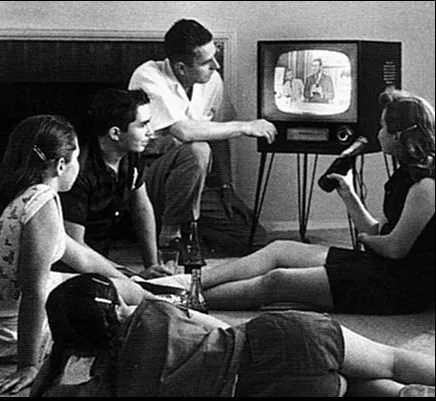
Photo: Evert F. Baumgardner - National Archives and Records Administration., CC0, via Wikimedia Commons
There's a particular kind of quiet that settles in after a really good documentary ends. Not the satisfied quiet of a great meal or the peaceful quiet of a long walk — something heavier than that. A little hollow. A little strange. You were just somewhere, with someone, watching something that felt genuinely meaningful. And now you're just sitting on your couch in the dark, phone in hand, wondering why you feel worse than you did two hours ago.
If that sounds familiar, you're not imagining it. And you're definitely not alone — which is maybe the most ironic part of this whole thing.
When Screens Start Feeling Like Company
Streaming platforms have spent the last decade quietly perfecting something that psychologists have a clinical name for: parasocial relationships. These are the one-sided emotional bonds we form with people on screen — hosts, narrators, on-camera scientists, wildlife filmmakers trekking through Patagonia. We feel like we know them. We root for them. We miss them when a series ends.
This isn't new. Television audiences were forming parasocial bonds with talk show hosts and soap opera characters long before Netflix existed. But what streaming has done is turbocharge the whole process. Autoplay removes the natural pause between episodes. Algorithm-driven recommendations keep feeding you more of the same voices, the same faces, the same emotional register. You don't just watch a filmmaker document bird migrations across four continents — you spend twelve hours with them across a weekend, learning their quirks, their humor, the way they pause before something genuinely moves them.
By Sunday night, that person feels like a friend. Except they have no idea you exist.
Nature Docs Are Especially Good at This
Here's where it gets interesting for anyone who spends time on platforms like Sterna — spaces built around nature, wildlife, and the kind of slow, observational content that rewards genuine attention. Nature documentaries are engineered, often beautifully so, to generate feelings of awe, tenderness, and connection. A narrator's voice guiding you through the private life of a family of Arctic wolves. A filmmaker whispering from behind a camera as a rarely-seen bird performs its mating display. These moments feel intimate in a way that most scripted television doesn't even attempt.
And that intimacy is real, in a neurological sense. Research consistently shows that awe-inducing content — the kind that makes you feel small in the best possible way — activates the same social bonding circuits that light up during genuine human interaction. Your brain, at some level, isn't entirely sure whether you're watching a screen or sharing an experience with another person.
Which is wonderful, until the episode ends.
The Crash Nobody Talks About
Psychologists have started calling it "post-binge emotional deflation," though the phenomenon doesn't have a single agreed-upon name yet. What it describes is the emotional dip that follows an extended period of parasocial engagement — the flatness, the low-grade sadness, occasionally even something resembling grief when a series concludes.
For American viewers, this dynamic is playing out against a backdrop that makes it particularly potent. Loneliness in the US has been climbing steadily for years. The Surgeon General's 2023 advisory on the loneliness epidemic wasn't hyperbole — it reflected genuine, measurable declines in the size and quality of Americans' social networks. People have fewer close friends than they did twenty years ago. They spend more time alone. They're hungry for connection in a way that streaming platforms are perfectly positioned to exploit, even if exploitation isn't exactly the intent.
When you're already running a social deficit, a documentary that makes you feel seen — that speaks to your curiosity, your sense of wonder, your love of wild places — fills something real. The problem is that it fills it temporarily, and incompletely, and the gap it leaves when it's over can feel larger than the one that existed before you pressed play.
Platforms Know What They're Doing
None of this is accidental. The mechanics of parasocial engagement are well understood, and streaming platforms invest heavily in content formats that deepen it. First-person narration. Behind-the-scenes footage that makes filmmakers feel like characters in their own stories. Social media presences that blur the line between on-screen persona and real human being. Merch. Newsletters. Patreon-style communities where superfans can pay for the illusion of closer access.
These tools aren't inherently cynical. Many of the creators building these connections are doing so genuinely, and the communities that form around nature and wildlife content can be legitimately meaningful. But the business incentive and the viewer's emotional wellbeing aren't always pointing in the same direction. Platforms benefit from you watching more. Your nervous system might benefit from you watching less.
So What Do You Actually Do With This?
It's worth being clear: the answer isn't to stop watching. That would be a strange conclusion to reach on a streaming platform, and it would also miss the point. The goal isn't to feel nothing — it's to understand what you're feeling and why.
A few things that seem to help, based on both research and a fair amount of anecdotal evidence from people who've thought about this:
Watch with other people when you can. The parasocial bond gets less sticky when there's a real human next to you reacting to the same thing. Shared awe is categorically different from solitary awe.
Let the credits actually roll. The autoplay function is designed to prevent you from sitting with what you just felt. Resisting it — even for five minutes — gives your brain time to process the emotional content rather than immediately replacing it with more stimulation.
Notice the deflation when it comes. Just naming the feeling — "I feel a little lonely after that" — takes some of its power away. It's also a useful signal that the content touched something real in you, which is worth paying attention to.
Follow the thread outward. If a documentary about shorebird migration genuinely moves you, that's information about what you care about. Local birding groups exist. Conservation organizations need volunteers. The feeling the screen generated can become a doorway into something real, rather than a substitute for it.
Streaming at its best does something genuinely valuable — it shows us the world, reminds us what's worth caring about, and occasionally cracks us open in ways we didn't expect. The tern skimming the surface of the ocean at dusk, the researcher who's spent thirty years studying one species and still can't hide their excitement — these things matter. They should move you.
Just don't let the screen be the only place you look for them.