Close Your Eyes and Watch TV: The Case for Nature Streaming's Audio Revolution
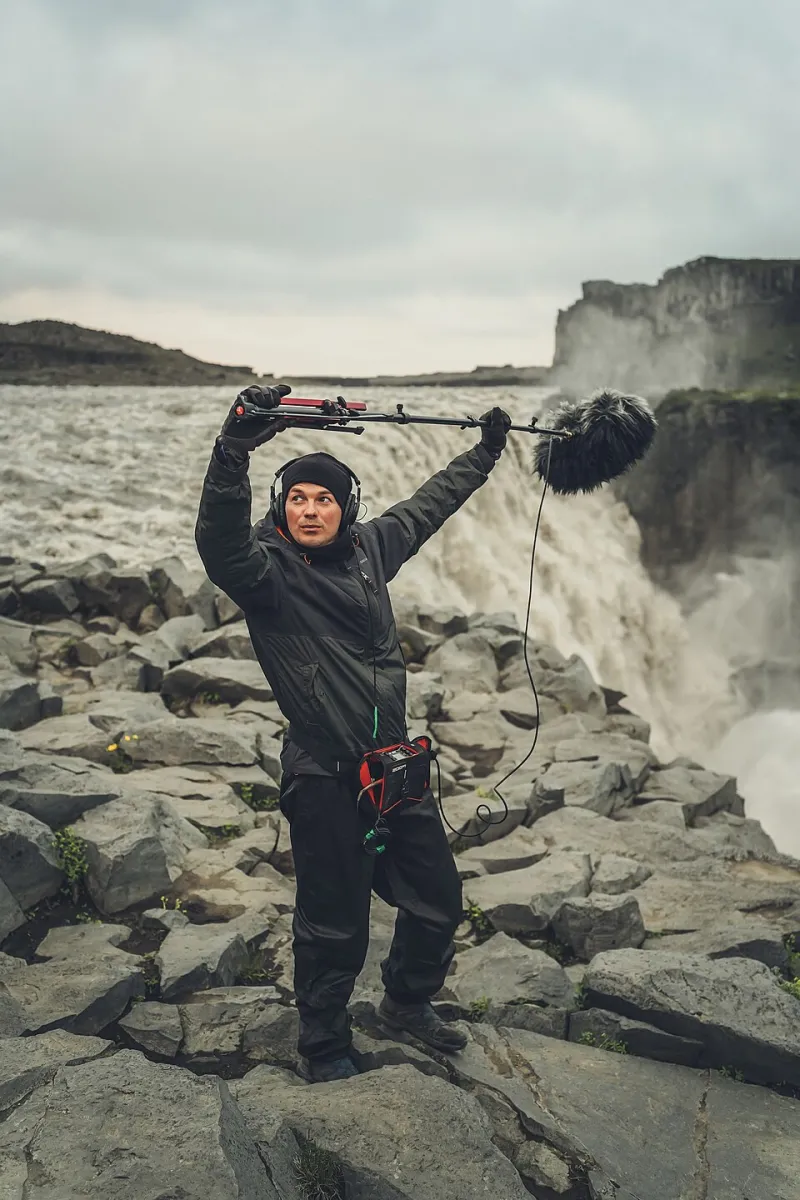
Photo: Free To Use Sounds, CC BY-SA 4.0, via Wikimedia Commons
Try an experiment tonight. Put on any good nature documentary, get to a scene you love — a shoreline, a forest at dawn — and then close your eyes. Just for a minute. If the soundtrack is doing its job, you'll still see the whole thing. If it isn't, you'll hear a narrator and a music bed and nothing else.
My bet? Mostly the second one. And that's a problem.
The Pixel Arms Race Missed the Point
Streaming platforms have spent a decade in an escalating visual arms race. 4K gave way to HDR, HDR gave way to 8K demos nobody asked for, and every marketing cycle promises that this year's ocean will be bluer than last year's ocean. Meanwhile, the actual experience of being in nature — which is what these shows are supposedly selling — is overwhelmingly an auditory experience.
Ask anyone who hikes. You hear a wood thrush long before you spot one. The sound of a river tells you how fast it's moving before your eyes do. A marsh at dusk is basically a radio broadcast with optional visuals. We are, in a very real sense, ear-first animals in wild spaces. Our screens should know this.
What the Recordists Know
Sound recordists — the people who crouch in swamps at 4 a.m. holding microphones like offerings — have been saying this for years. Talk to them and you'll hear the same frustrations on repeat: wind protection gear that ruins the very wind it's protecting, editors ducking ambience under narration, the constant pressure to make everything 'clean.'
But something is shifting. Recordists are now capturing in binaural and ambisonic formats — three-dimensional sound fields that reproduce not just what you'd hear, but the direction and distance of it. A tern colony recorded properly doesn't just sound loud. It sounds like it's around you, thousands of birds at different depths, waves behind you, wind overhead.
The catch: that material only works if platforms deliver it. Spatial audio support on major streaming services remains spotty, inconsistently labeled, and rarely marketed for documentaries. The tech exists. The will doesn't — yet.
Why Ears Beat Eyes
Here's my argument, stated plainly: audio is the more immersive sense for nature content, and platforms keep investing in the wrong one.
Vision is directional. You look at a frame; the frame ends at the edges. Sound has no edges. A great mix doesn't put you in front of the wilderness — it dissolves the boundary entirely. It's also the sense that works when your eyes are busy. You can listen to a nature doc while cooking, walking, lying on the floor in the dark. Try that with 8K.
There's a deeper benefit, too. Sound-forward nature programming forces patience. You can't cut away every two seconds or the mix falls apart. Building television around recorded sound means building television around waiting, listening, and letting the wild speak at its own volume. That's not a limitation. That's the whole product.
What I'd Like to See
A 'spatial audio' badge that actually means something, applied to nature docs. Original mixes released as standalone listening experiences — think of them as albums. And at least one flagship series where the narration steps aside entirely for long stretches and lets the habitat carry the scene.
The wild has always been talking. We've just been watching with the sound turned down.