Pressing Play on Power: The Documentaries That Rewrote American Law, Culture, and Conscience
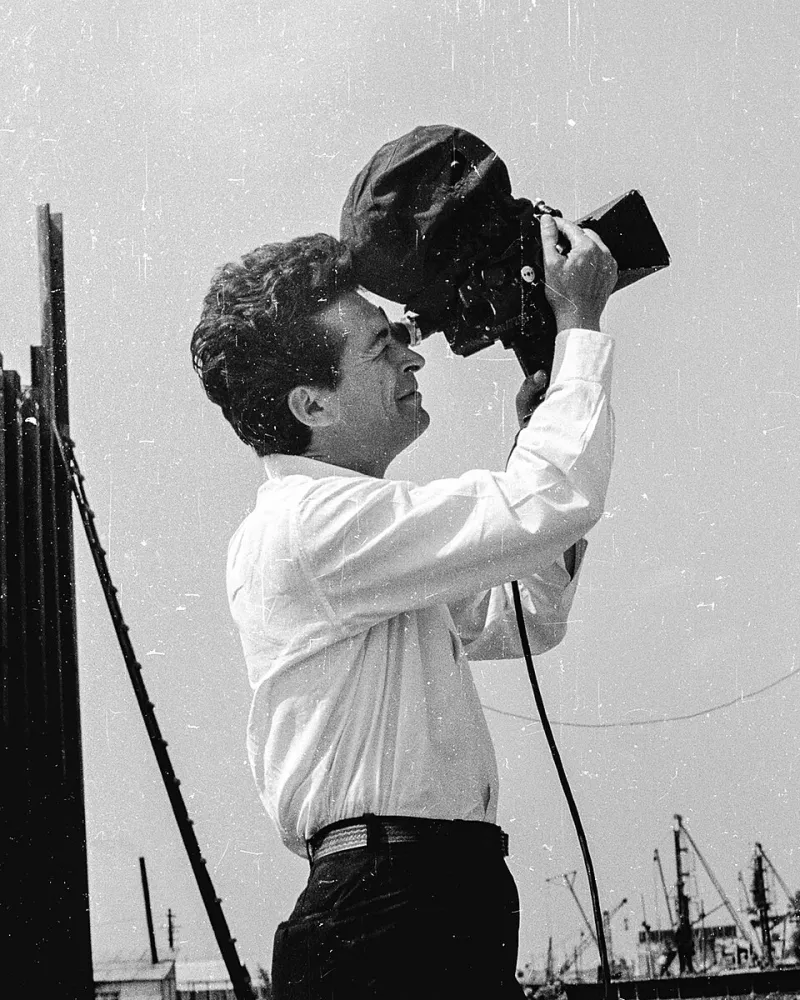
Photo: Alex Gâlmeanu, CC BY-SA 4.0, via Wikimedia Commons
Most movies make you feel something and then fade. You close the laptop, go to bed, and by Thursday you're not entirely sure you remember the main character's name. But every so often, a documentary comes along that refuses to stay on the screen. It follows you into your daily life, into your conversations, into the voting booth. It becomes, in the truest sense of the word, consequential.
In the streaming era — where a film can reach ten million households in a weekend without ever touching a theater — that potential for impact has grown exponentially. These are the docs that didn't just entertain. They moved things.
13th (2016) — Netflix
Ava DuVernay's examination of the Thirteenth Amendment and the systemic criminalization of Black Americans didn't just win awards. It became required viewing in law schools, corporate diversity training programs, and congressional offices. The film draws a direct line from post-Civil War convict leasing to modern mass incarceration, and it does so with a clarity that academic texts rarely achieve.
When the racial justice movement surged in 2020, 13th saw a massive resurgence in viewership — Netflix made it temporarily free to watch without a subscription. Policy researchers noted that the film contributed meaningfully to public pressure around cash bail reform legislation in states including California, Illinois, and New Jersey. It also sparked internal conversations at major corporations about their use of prison labor in supply chains, several of which resulted in policy changes.
DuVernay has spoken about the intentionality behind the film's structure — the decision to make it emotionally accessible without sacrificing intellectual rigor. "I wanted it to work on a grandmother in Alabama and a law professor in New Haven," she said in one interview. It did.
Icarus (2017) — Netflix
Bryan Fogel set out to make a personal film about doping in amateur cycling. What he ended up with was a geopolitical thriller that helped expose one of the largest state-sponsored doping programs in sports history. His unlikely friendship with Russian scientist Grigory Rodchenkov — who became a central whistleblower in the scandal — gave the film a human anchor that raw investigative journalism often lacks.
The documentary's release directly accelerated international pressure on the International Olympic Committee and contributed to Russia's partial ban from the 2018 Winter Olympics in Pyeongchang. Rodchenkov himself was later protected under the Rodchenkov Anti-Doping Act, signed into US law in 2020 — legislation that legal observers have noted was partly enabled by the public awareness Icarus generated.
For streaming platforms, Icarus became a case study in how non-fiction content could break actual news. It wasn't just a documentary; it was an ongoing story with real-world consequences that kept audiences engaged long after the credits rolled.
American Factory (2019) — Netflix
Produced by Barack and Michelle Obama's Higher Ground Productions, this Sundance winner followed the reopening of a former GM plant in Dayton, Ohio under Chinese ownership. It's a nuanced, sometimes uncomfortable look at labor, globalization, and the complicated human realities behind economic statistics.
What made American Factory remarkable wasn't a single policy outcome — it was the conversation it forced. In an era of intense political tribalism, the film resisted easy villains. It showed Chinese managers genuinely confused by American workplace expectations. It showed American workers genuinely struggling with economic displacement. It became a touchstone in discussions about the future of manufacturing, union organizing, and US-China economic relations.
Labor organizers cited the film repeatedly during the UAW's resurgent organizing drives in the early 2020s. It gave a human face to abstract arguments about worker rights that union advocates had struggled to communicate to younger audiences.
The Vow and Keep Sweet: Pray and Obey — HBO Max and Netflix
This pairing deserves attention because together they illustrate how documentary storytelling has reshaped the legal landscape around cults and coercive control. The Vow (2020) chronicled the NXIVM sex trafficking case, while Netflix's Keep Sweet (2022) examined the FLDS community under Warren Jeffs.
Both productions brought renewed attention to prosecutorial efforts that had stalled in the public consciousness. Legal analysts pointed to The Vow specifically as a factor in sustaining public interest and media pressure during Keith Raniere's sentencing proceedings. Several states subsequently introduced or strengthened legislation targeting coercive control and trafficking operations that mirrored NXIVM's structure.
More broadly, both films contributed to a cultural shift in how Americans understand manipulation and psychological coercion — topics that had previously been dismissed as fringe concerns but are now part of mainstream legal and psychological discourse.
Seaspiracy (2021) — Netflix
Controversial from the moment it dropped, Seaspiracy divided marine scientists and environmentalists while simultaneously driving one of the most dramatic behavioral shifts ever documented in response to a streaming release. Within weeks, Google searches for "sustainable seafood" and "is fish sustainable" spiked dramatically. Several major retailers reported increases in plant-based seafood alternatives. The hashtag #Seaspiracy trended for days.
Scientists pushed back on some of the film's claims, and that debate itself became part of the story — a meta-conversation about how documentary filmmaking handles scientific complexity. But the underlying impact on consumer behavior was undeniable, and it prompted several fishing industry bodies to accelerate transparency initiatives they had previously been slow-walking.
Navalny (2022) — CNN Films / HBO Max
Daniel Roher's portrait of Russian opposition leader Alexei Navalny was a masterclass in real-time documentary filmmaking — capturing events as they unfolded rather than reconstructing them in hindsight. The film's release coincided with intensifying international attention on Russian political repression, and it became an essential reference point for journalists, policymakers, and human rights advocates navigating the post-invasion geopolitical landscape.
US State Department officials referenced the film in public statements. Congressional hearings on Russia policy cited it. When Navalny died in Russian custody in 2024, the documentary became an immediate record of witness — a film that had captured a man's defiance and humanity before the worst happened.
What This Means for the Future of Streaming
The throughline connecting all of these films isn't budget or platform or even subject matter. It's intentionality — filmmakers who understood that their job wasn't just to document but to communicate, and who made formal and structural choices in service of that goal.
For streaming platforms, the lesson is equally clear: non-fiction content that drives real-world conversation is among the most durable and valuable programming they can own. It gets shared, cited, assigned, and revisited in ways that most scripted content simply doesn't.
At Sterna.tv, we believe the world's most compelling stories are the ones that are actually happening. The documentaries above prove that streaming isn't just a delivery mechanism for entertainment — at its best, it's a lever for change. And sometimes, pressing play is the most consequential thing a viewer can do.