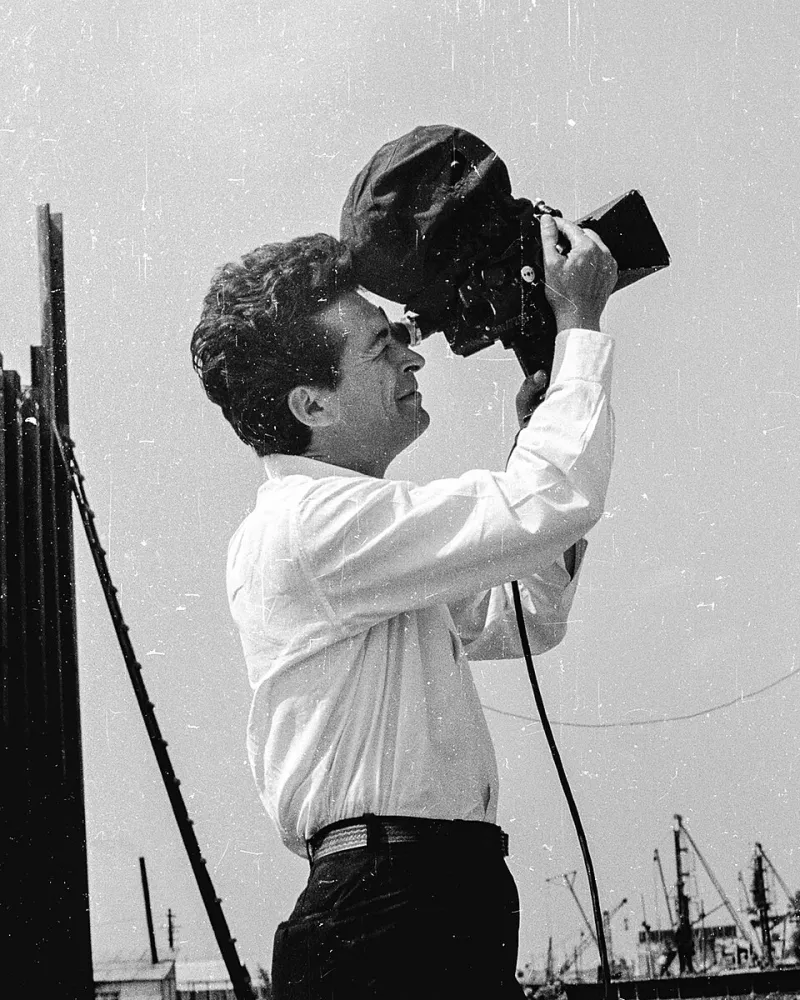
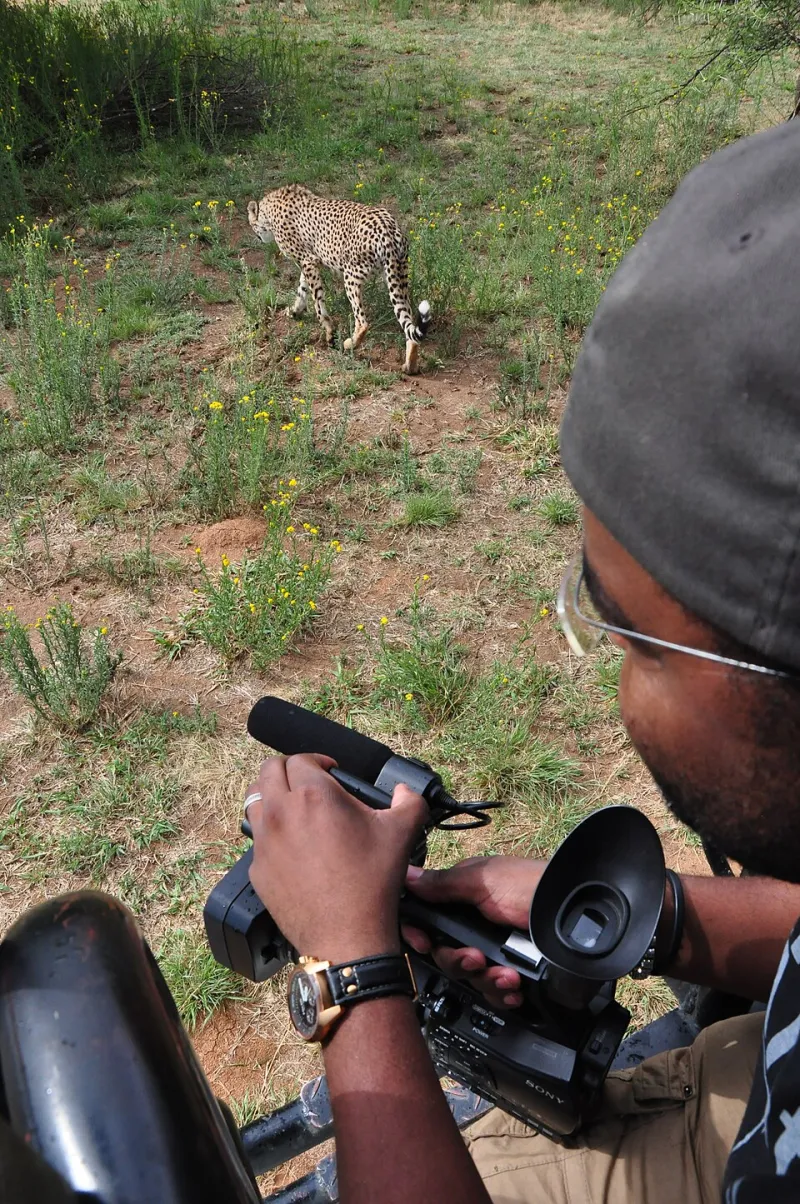
Chasing the Endless Summer: Inside the Documentary Pushing Nature Filmmaking to Its Absolute Limits
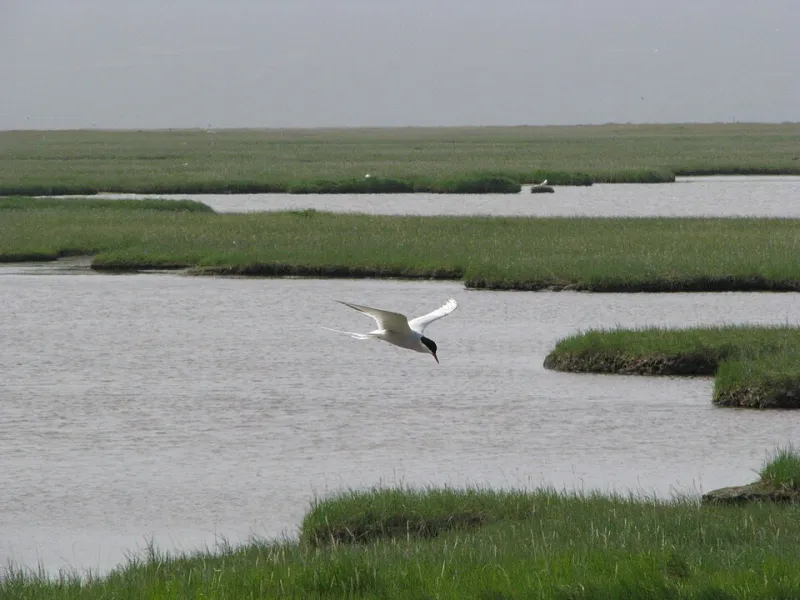
Photo: USFWSAlaska, Public domain, via Wikimedia Commons
There's a bird out there that never really experiences winter. Every single year, the arctic tern flies from the Arctic to the Antarctic and back — a round trip of roughly 44,000 miles — chasing daylight across both poles. It sees more sunlight annually than any other creature on Earth. For most of human history, that story existed only in the margins of ornithology textbooks. Now, for the first time, a nature documentary series is attempting to follow that journey in full, in real time, from liftoff to landfall.
And the technology required to pull it off reads less like a film production and more like a NASA mission briefing.
The Problem With Filming Something That Never Stops Moving
Here's the challenge that has defeated filmmakers for generations: arctic terns don't wait around. They cross open oceans, ride storm fronts, and navigate between hemispheres without pausing for a camera crew to catch up. Traditional wildlife documentary methods — stationary hides, telephoto lenses, patience measured in weeks — simply don't apply when your subject is already 3,000 miles away by the time you've set up your tripod.
The production team behind this new series had to completely rethink what "following" an animal actually means in 2024. Their solution was a layered approach that combines miniaturized satellite trackers (light enough not to affect the bird's flight) with a global network of drone operators, marine cinematographers, and data scientists working in coordination across multiple continents and time zones.
Think of it less like a traditional film shoot and more like a live news operation — except the correspondent weighs about four ounces and has no interest in stopping for an interview.
Satellite Tags Changed Everything
The real breakthrough here isn't the cameras. It's the data.
Modern satellite tracking technology has shrunk to the point where researchers can now attach solar-powered GPS transmitters to birds as small as terns without meaningfully disrupting their behavior. These tags ping location data multiple times per day, feeding into visualization platforms that map each bird's route in near-real time. For the documentary team, that meant knowing — with genuine precision — where their subjects were headed next.
"You're not guessing anymore," one of the series' field producers explained in a behind-the-scenes clip. "You're looking at a dashboard, and the bird is basically telling you: I'm going to be off the coast of Portugal in 36 hours. You can actually position a crew there."
That shift from reactive to predictive filmmaking is enormous. It's the difference between hoping you'll catch a migration and actually being able to intercept one. And when you layer drone cinematography on top of that — lightweight rigs capable of following birds at altitude without the noise and disturbance of a helicopter — you start getting footage that genuinely looks like it came from another planet.
Why Streaming Platforms Are Going All-In on This
Nature documentaries have always performed well on streaming. But the scale of investment platforms are now willing to commit to projects like this one has shifted dramatically. We're talking multi-season budgets, global production footprints, and marketing rollouts that rival prestige drama series.
The reason isn't hard to figure out. Streaming audiences — particularly in the US — have developed a strong appetite for what you might call "epic reality": non-fiction content that delivers the emotional and visual scale of a blockbuster without the artifice of scripted storytelling. When a nature documentary can show you something genuinely impossible to fake, something happening right now in the real world, it creates a kind of engagement that no CGI sequence can replicate.
And the arctic tern story has that quality in abundance. The sheer ambition of the migration — the distances, the environments, the biological improbability of it all — gives the series a built-in narrative arc that most screenwriters would kill for. Birth, departure, survival, return. It's a hero's journey told by a four-inch seabird, and it works.
For platforms competing in an increasingly crowded streaming landscape, these hyper-ambitious tracking documentaries also serve a secondary purpose: they're genuinely hard to replicate quickly. A scripted series can be greenlit and produced in 18 months. A multi-year wildlife tracking project, with its bespoke technology infrastructure and global logistics, takes years to execute properly. That makes it a meaningful differentiator.
Real-Time Data as Storytelling Tool
One of the more fascinating creative choices in this series is how it handles data visualization. Rather than burying the satellite tracking information in dry on-screen graphics, the production team worked with a data design studio to build animated map sequences that actually function as narrative devices — showing the tern's route as a living, breathing line moving across the globe, pausing at feeding grounds, accelerating through storm systems, crossing the equator.
For American audiences accustomed to sports broadcast graphics and weather radar maps, these sequences feel immediately intuitive. You don't need a biology degree to understand what you're watching. The data becomes emotional. A detour around a weather system reads as tension. A burst of speed toward the Antarctic feels like release.
It's a smart translation of scientific information into cinematic language, and it points toward where nature documentary storytelling is heading more broadly — toward a fusion of data journalism and traditional filmmaking that uses real-world information as dramatic raw material.
What It Means for How We See Wildlife
There's something philosophically interesting happening underneath all the technology talk. When you can follow a single bird across 44,000 miles of ocean and ice, when you can watch its GPS dot move across a real-time map while simultaneously seeing drone footage of it banking over the South Atlantic, the animal stops being an abstraction.
It becomes, in a very real sense, an individual. With a route. With choices. With a story.
That shift in perception — from "wildlife" as a category to specific animals as characters — is something nature filmmakers have been working toward for decades. What technology is now enabling is the ability to sustain that perception across an entire migration, rather than just capturing a few powerful moments in a fixed location.
For viewers, the effect is a kind of intimacy with the natural world that feels genuinely new. You're not watching nature from a distance. You're traveling with it.
The Bigger Picture
The arctic tern has been making this journey for millions of years, long before there were humans to watch it and long before there were cameras to capture it. The fact that we can now follow along — really follow, in something close to real time, across the full arc of the migration — says something interesting about where documentary filmmaking sits right now.
The tools have finally caught up to the ambition. And streaming platforms, for all their algorithmic quirks and content-volume obsessions, are at least occasionally willing to fund the kind of project that takes years, spans continents, and asks a tiny seabird to be the protagonist of an epic.
That's worth pressing play on.