Murder, Mystery, and Missing Meerkats: Why True Crime Always Beats Wildlife in the Streaming Wars

Photo: Unknown authorUnknown author, Public domain, via Wikimedia Commons
Let's be honest about something. You've probably started a nature documentary with the best of intentions — maybe something about Arctic foxes or deep-sea bioluminescence — and quietly switched over to a true crime series before the first commercial break would have even hit. Don't feel bad. Millions of Americans do exactly the same thing every single night.
Nature content is having what the industry keeps calling a "moment." Platforms are spending serious money on wildlife programming. The cinematography has never been more jaw-dropping. And yet, when the actual viewership numbers come out, it's almost always a docuseries about a poisoning, a disappearance, or a con artist who fooled an entire town that ends up dominating the conversation. The streaming desert for nature docs is real — and understanding why it exists says a lot about who we are as an audience.
The Brain Wants a Villain
Here's the uncomfortable truth: human beings are wired to track other human beings. Evolutionary psychologists have been saying it for years. Our brains are social-threat detectors first and aesthetic appreciators second. When you watch a documentary about a humpback whale navigating a warming ocean, it's beautiful and it matters — but there's no villain. There's no suspect. There's no moment where you lean forward and whisper I knew it at your television.
True crime delivers something nature content structurally cannot: a puzzle with human stakes. The "whodunit" format activates the same cognitive machinery we use to navigate social hierarchies, assess trustworthiness, and protect ourselves from danger. Watching a Netflix doc about a fraudulent wellness guru isn't just entertainment — your brain is treating it like a survival drill. Wildlife content, no matter how stunning, can't compete with that on a neurological level.
This doesn't mean nature documentaries are lesser. It just means they're asking more of the viewer — more patience, more imagination, more willingness to sit with awe rather than suspense.
Prime Time Is a Cruel Landlord
There's also a scheduling reality that platforms rarely talk about publicly. True crime is engineered for the exact window when most Americans are actually watching — roughly 8 to 11 PM on weeknights, often after long days at work when cognitive bandwidth is low. The genre thrives on momentum. Each episode ends with a revelation or a cliffhanger that makes clicking "next episode" feel almost involuntary.
Nature documentaries, by contrast, tend to reward a different kind of attention. The best ones — the ones that genuinely move you — ask you to slow down and observe. That's a hard sell when you're exhausted, half-scrolling on your phone, and the algorithm is dangling a new murder mystery two clicks away.
Platforms know this. Which is why, despite all the marketing around wildlife content, the recommendation engines at the major streamers are quietly steering casual viewers toward true crime during those high-traffic hours. Nature docs often get surfaced in the morning, on weekends, or in the "feel-good" category buckets. It's not a conspiracy — it's just data. And the data says people pick crime.
The Cultural Moment That Got Away
There was a time — not that long ago — when a nature documentary could genuinely dominate the cultural conversation. Planet Earth in 2006 was a genuine phenomenon. People gathered around televisions to watch it the way they'd gather for a sporting event. David Attenborough was a household name in a way that felt earned, not algorithmic.
What changed? Partly, the sheer volume of content. When there were fewer options, a truly exceptional nature doc could command attention simply by being the best thing available. Now it has to compete with thousands of hours of programming optimized specifically to hijack your attention. The spectacular has become expected, and expectation kills wonder.
True crime, meanwhile, keeps finding new angles. It evolved from straightforward investigations into something more culturally complex — examining systemic failures, racial injustice, media complicity, and the reliability of memory. It became sociologically interesting in ways that kept broadening its audience. Wildlife content hasn't made that same leap with mainstream viewers, even though the best nature docs are absolutely making environmental and political arguments. The message isn't always landing.
Is There a Path Back?
Some filmmakers are trying to close the gap by borrowing true crime's playbook. You're seeing more nature content that leans into narrative tension, follows individual animals across multiple episodes, and builds genuine emotional investment in outcomes that are genuinely uncertain. Think less "gorgeous footage of a herd" and more "will this specific wolf make it through winter." It's a promising direction.
There's also an argument that the audience for nature content, while smaller, is more engaged and more loyal. Viewers who seek out wildlife documentaries tend to finish them, recommend them, and return to the genre. That's a different kind of value than the raw numbers that true crime generates — and platforms that understand long-term audience relationships are starting to pay attention to it.
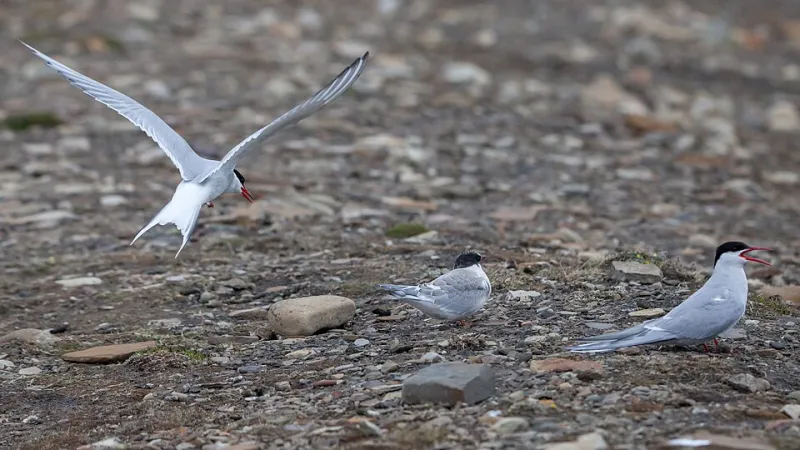
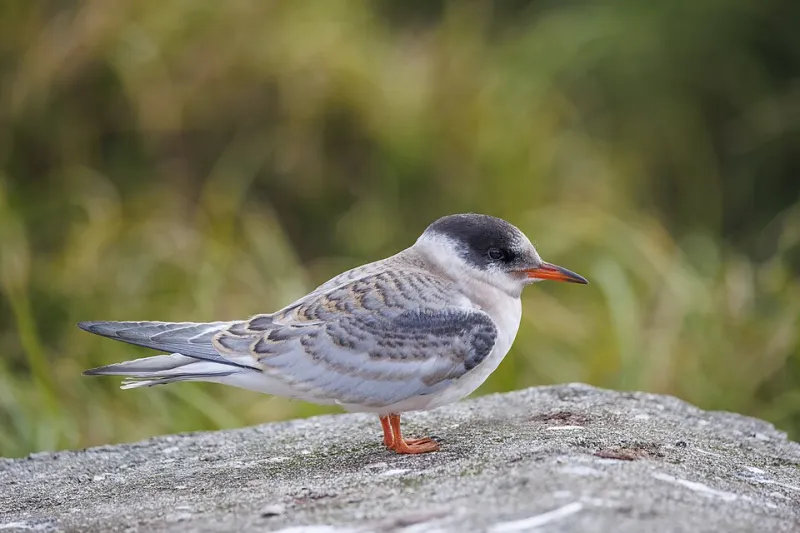
Here at Sterna.tv, we think about this a lot. The whole point of this platform is the idea that what matters in the world — genuinely matters — isn't always what's trending. The ocean doesn't generate a cliffhanger. A tern doesn't have a motive. But the stories happening out there in the natural world are as urgent and as consequential as anything unfolding in a courthouse. The challenge is finding the storytelling language that makes that urgency feel immediate to an audience trained to respond to human drama.
The Niche That Refuses to Stay Niche
Calling nature documentaries a "niche" has always felt slightly wrong. Hundreds of millions of people have watched them. They've changed environmental policy. They've made species famous. They've produced some of the most technically astonishing filmmaking in the history of the medium.
But "niche" in the streaming economy means something specific: content that serves a passionate, defined audience rather than a broad, casual one. And by that definition, yes — nature docs are niche. They're not going to dethrone true crime in the ratings anytime soon. The psychology is too deeply stacked against it.
What they can do is matter more than the numbers suggest. They can reach the right people at the right moment and genuinely change something — a perspective, a habit, a vote. That's not a consolation prize. That's actually a pretty meaningful reason to keep making them, and keep watching them.
Even if you do occasionally switch over to the murder documentary at 9:30. We're not judging.