Why the Weirdest Animals on the Planet Are Quietly Winning the Streaming Wars
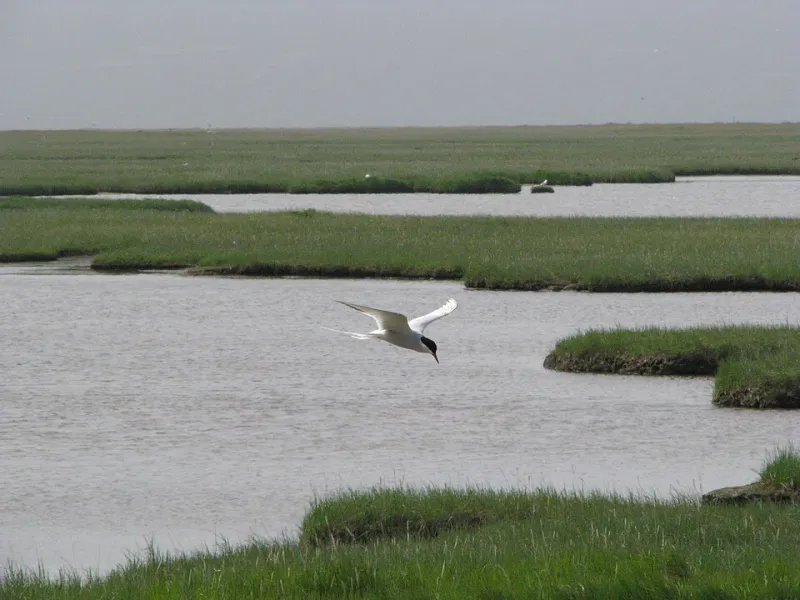
Photo: USFWSAlaska, Public domain, via Wikimedia Commons
Somewhere between a David Attenborough epic and a viral TikTok of a mantis shrimp punching through aquarium glass, something shifted. Streaming audiences — the same ones who used to demand sweeping savanna cinematography and slow-motion lion hunts — started clicking on something else entirely. A 45-minute documentary about mudskippers. A deep dive into the social lives of hagfish. An intimate portrait of a bird most people couldn't pick out of a lineup.
And they didn't just click. They stayed.
The Numbers Don't Lie
Platform analytics don't always make headlines, but when they do, they tend to surprise people. Over the past two years, a consistent pattern has emerged across multiple streaming services: documentary content featuring lesser-known, non-flagship species is outperforming traditional blockbuster nature fare on completion rate metrics. That's the percentage of viewers who actually finish what they start — arguably the truest measure of genuine engagement in a world drowning in content.
Industry insiders have started using the term "charismatic microfauna" to describe this category. It's a phrase borrowed loosely from conservation biology, where it originally referred to small or unglamorous species that nonetheless capture public affection. In streaming boardrooms, it's become shorthand for a very specific content bet: if you build an intimate, character-driven documentary around an animal most Americans have never thought about, you might just build a loyalty loop that no lion pride can match.
The logic, once you hear it, is almost obvious. Viewers already know what a cheetah looks like running at full speed. They've seen it. They've seen it in HD, in slow motion, narrated by at least four different British voices. There's no discovery left in that moment. But a tern — specifically the Arctic tern, a bird that flies the longest migration of any animal on Earth and yet barely registers in mainstream nature content — that's a story with room to breathe.
Intimacy Over Spectacle
What separates a niche-animal documentary from its blockbuster cousins isn't just the subject matter. It's the entire tonal register. When you're not competing with the visual grammar of a Marvel film — explosions of wildebeest, crocodile ambushes, the operatic death of something large — you're free to slow down. To notice things.
Filmmakers working in this space talk about it almost like a creative liberation. Without the pressure to deliver spectacle every eight minutes, they can spend real time on behavior. On relationships. On the kind of quietly astonishing facts that make you put your phone down and just watch — like the fact that some shorebirds essentially shut down non-essential organs during migration, or that certain cephalopods appear to dream.
That intimacy translates directly into viewer behavior. People who feel like they've genuinely learned something, who feel like they've been let in on a secret, don't just finish a documentary. They tell someone about it. And in the current streaming landscape, word-of-mouth from a genuinely surprised viewer is worth more than almost any advertising spend.
The Retention Strategy Nobody Talks About
Here's the part streaming executives are slightly cagey about but will occasionally admit over coffee: niche animal content isn't just good television. It's a retention tool.
The math works like this. A prestige nature series with a massive production budget and a famous narrator will generate enormous opening-weekend numbers. It'll trend on social. It'll get written up everywhere. And then, fairly quickly, it'll be watched by the people who were always going to watch it, and the curve flattens.
A documentary about, say, the wandering albatross — released quietly, marketed modestly — does something different. It finds its audience slowly, through recommendation and algorithm, and that audience tends to be deeply engaged. They go looking for more. They subscribe to newsletters. They follow the filmmakers. They become, in the language of platform analytics, "high-value users" — the kind of subscribers who don't cancel after their free trial ends.
Platforms building libraries of niche content are essentially constructing a web of these engagement loops. Each documentary about an overlooked species becomes a node in a network, pulling in viewers who didn't know they cared about that animal until they did.
What This Means for the Post-Prestige Era
We're living through a strange moment in television history. The so-called "peak TV" era — when every platform was racing to produce the biggest, most expensive, most awards-worthy content imaginable — has given way to something messier and more interesting. Audiences are fatigued by scale. They're tired of being impressed. What they want, increasingly, is to be surprised.
Niche animal documentaries deliver surprise almost by definition. When you sit down to watch something about a creature you've never considered, every fact is a revelation. Every behavioral quirk lands differently than it would if you'd been primed by a decade of franchise storytelling. The bar for wonder is lower, which paradoxically makes the wonder feel higher.
This is the tern effect in its purest form. Not just a specific bird, but a principle: the less familiar the subject, the more available the viewer is to be genuinely moved by it. Streaming platforms that have figured this out are sitting on something genuinely valuable — a content strategy that scales cheaply, builds loyalty deeply, and keeps delivering discovery long after the prestige blockbusters have faded from the cultural conversation.
Where It Goes From Here
The obvious risk is saturation. If every platform starts commissioning documentaries about obscure invertebrates and migratory shorebirds, the novelty that drives the whole thing evaporates. The tern effect only works because most people haven't seen a serious documentary about a tern. Once they have — once the algorithm has served them three of them back-to-back — the intimacy starts to feel like a formula.
The smarter platforms seem to understand this. The goal isn't to flood the market with niche animal content. It's to curate it — to find the specific creatures and the specific filmmakers whose combination of subject and sensibility creates something genuinely irreplaceable. That's a harder editorial job than just commissioning more of what worked last quarter.
But for now, at least, the weird animals are winning. And honestly? It's hard to argue with a hagfish.