One Bird, Four Screens: Keeping Up With a Migration From My Couch in Ohio
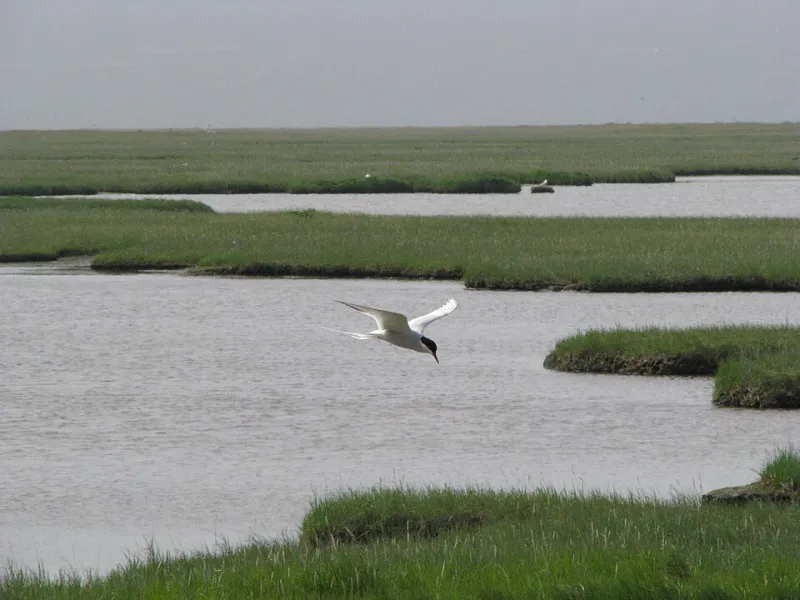
Photo: Andreas Weith, CC BY-SA 4.0, via Wikimedia Commons
Her name — the researchers' name, not hers — is KK74. She's an Arctic Tern wearing a lightweight tracking tag, and for the past several months I have checked in on her the way some people check a fantasy football lineup: with coffee, mild anxiety, and zero control over the outcome.
The Longest Commute on Earth
Arctic Terns run the greatest migration of any animal on the planet. We're talking roughly 4,000 miles of travel in a single year for some populations — pole to pole, breeding in Greenland or Alaska, then swinging down the Atlantic to winter at the bottom of the world. They see more daylight than any other creature. They also, as I learned very quickly, do not care about your schedule.
KK74's journey played out across a patchwork of viewing experiences: a live coastal cam during nesting season, a tracking map that updated in near-real-time, and a streaming documentary series that had embedded with the research team. No single platform told the whole story. I had to stitch it together myself, like assembling a documentary in reverse.
What Attachment Actually Feels Like
Here's the thing nobody warns you about: once you know one bird, you can't un-know her. When KK74 stalled over the Caribbean for three days, I checked the map at stoplights. When her ping finally moved south of the equator, I told my wife. She did not care. That's fine. This was between me and the tern.
There's a weird asymmetry to it, too. Documentaries usually hand you a pre-packaged arc — birth, struggle, triumph, narration by a man with a comforting voice. Watching a live migration offers none of that. Most of the time, nothing happens. The bird eats. The bird flies. The wind does wind things. But because nothing was guaranteed, the small stuff landed hard. A clean data point over open ocean felt like a season finale.
The People Behind the Pings
The researchers running these tracking projects aren't naive about the emotional pull. When I spoke with one project coordinator, she put it plainly: the tag exists for the science, but the story exists for us. Migration data helps identify critical stopover sites, feeding corridors, and climate stress points. The audience — us, glued to a dot on a map from a living room in Columbus — provides the political will that raw data never could.
The hope, she said, isn't that Americans cry about one tern. It's that the attachment generalizes. You care about KK74, then you notice the terns at your own lakefront, then you learn their names aren't KK anything — they're just terns, and they need the same corridors, the same safe coastline, the same intact food web.
What to Do With a Broken Heart
I won't spoil how KK74's year ended, partly because the season isn't over, and partly because — spoiler alert — it might not end well. Ocean warming is reshaping the sand lance and small fish these birds feed on. Mortality events have hit colonies hard in recent years. Following one bird means accepting that the story can simply stop.
And yet I'd recommend it. Not the constant checking — I've cut back, mostly. But the practice of rooting for a single wild life across four thousand miles rewires something. It converts the abstract 'nature is in trouble' into a specific, feathered, stubborn somebody.
The screen didn't take me to the wild. It just introduced us. The rest of the relationship, like every good one, has to happen out there.