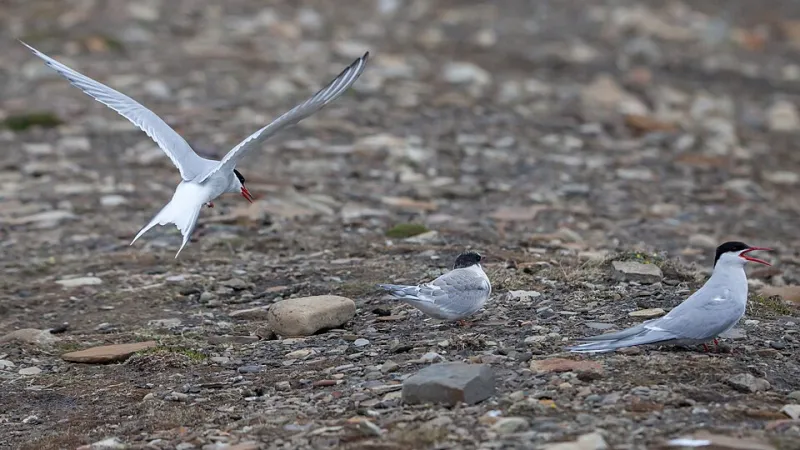
Pole to Pole, Take After Take: The Insane Logistics of Filming the Arctic Tern's Global Marathon
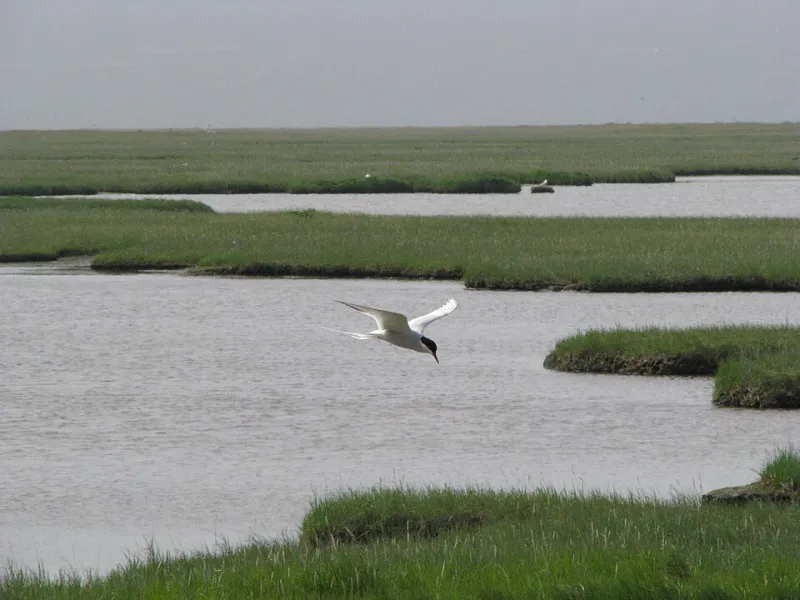
Photo: USFWSAlaska, Public domain, via Wikimedia Commons
Somewhere over the Atlantic right now, a bird the weight of a soda can is finishing one of the most ridiculous commutes in the natural world. The Arctic Tern doesn't just migrate — it relocates. Nesting grounds above the Arctic Circle, wintering waters off Antarctica, then a hard left back north. Annually. That's roughly 44,000 miles logged per year, and over a tern's thirty-year lifespan, the equivalent of three round trips to the moon.
For documentary crews, that itinerary is less a subject than a dare.
You Can't Follow a Bird That Won't Sit Still
Traditional wildlife filmmaking is built on a simple assumption: the animal stays put long enough for you to build a hide, wait out the weather, and get the shot. Terns break that assumption on day one.
"You're not filming a species," one seabird cinematographer told us. "You're filming a moving target that changes hemispheres twice a year. The colony is the only address they keep."
That's why modern tern documentaries lean on satellite telemetry. Researchers fit birds with tags weighing a few grams — light enough that the tern barely notices, precise enough to ping a location every few days. The data doesn't just serve science anymore. It's now the spine of the storytelling. Filmmakers get a map of the journey before they ever roll camera, letting them stage crews at chokepoints: the Bay of Fundy, the coast of New England, the waters south of Africa.
Patience, But With a Budget
Here's the part that never makes the highlight reel: the waiting. A tern might linger in a feeding zone for three days, then vanish. Crews chartered fishing boats out of Maine and Massachusetts have sat in fog banks for a week waiting for a flock that GPS promised was coming. In the Southern Ocean, they've hired expedition vessels at eye-watering day rates for what amounts to a maybe.
Then there's the camera problem. You can't strap a GoPro to a bird that flies at the edge of its caloric budget. So the POV shots come from workarounds — drone units flown far enough back to avoid spooking the flock, tiny nest cameras rigged during incubation when adults are least likely to abandon, and good old-fashioned long lenses from boats bobbing in four-foot swells.
"The glamour shot everyone remembers — the tern skimming a wave at golden hour — that might be forty hours of footage for six seconds," another filmmaker told us. "You earn it or you don't get it."
Why Streamers Can't Resist This Bird
So why has a seabird most Americans couldn't identify on a beach become the poster child for premium nature streaming? Simple math, actually. The tern's story has everything the algorithm loves: a journey with a beginning and an end, real stakes (chicks that hatch late don't make it), villains (skua predation, collapsing fish stocks), and a scale that no fictional blockbuster can fake.
It's also genuinely American-adjacent. Tern colonies dot the Maine coast and Cape Cod, meaning US audiences can watch a documentary and then drive two hours to see the actual bird. That bridge between screen and backyard is rare in big-cat or deep-sea programming.
The tern, in other words, delivers the epic without asking viewers to suspend disbelief. It's real, it's verifiable, and it happens every single year whether the cameras show up or not.
And that's exactly why the crews keep coming back. As one veteran put it: "The bird doesn't care about our schedule. It's the only honest production partner I've ever had."