The Quiet Frame: What Happens When Nature Docs Stop Being Afraid of Silence
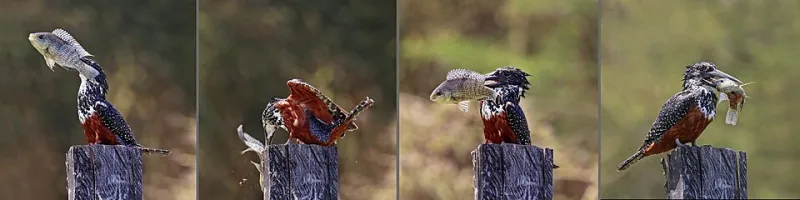
Photo: Charles J. Sharp, CC BY-SA 4.0, via Wikimedia Commons
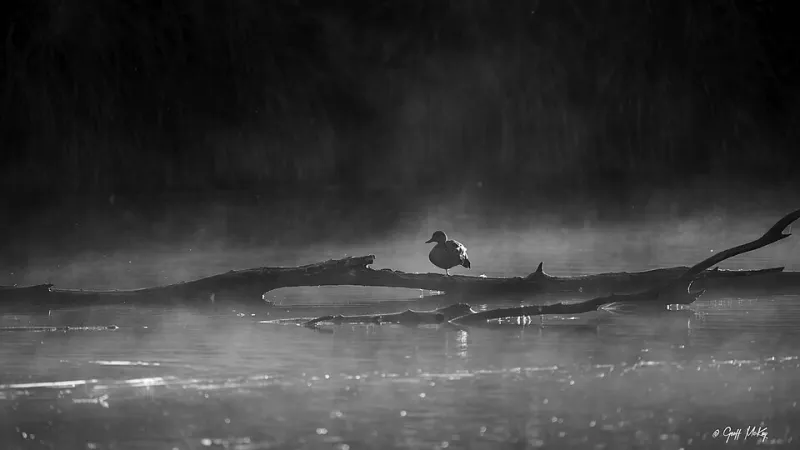
There's a shot that used to show up in nature documentaries all the time. A single bird perched on a branch. No predator closing in. No courtship display. No narrator rushing to fill the air. Just the bird, the branch, the wind moving through background grass, and maybe thirty seconds of your life asked to slow down alongside it.
That shot is basically extinct now.
Not because filmmakers stopped caring, and not because audiences suddenly became incapable of sitting still. It disappeared because the platforms that carry these films started measuring everything — every pause, every scroll, every moment a viewer's thumb drifted toward another title — and the data came back with a verdict: stillness looks like failure.
What the Metrics Decided for Us
Streaming platforms are, at their core, data companies that happen to distribute content. The metrics they track are genuinely useful for some things: figuring out whether a show's first episode is losing people before the second one, or whether a specific runtime is performing better in a given market. But when those same metrics get applied to individual scenes inside a documentary — when a producer can see exactly where viewers dropped off within a 47-minute film — the pressure to cut anything "slow" becomes almost irresistible.
The problem is that "slow" and "meaningful" often look identical in a retention graph.
A two-minute sequence of a humpback whale drifting through open water, with minimal narration and a spare score, might cause a measurable dip in engagement. So might a tense standoff between two rival wolf packs. Both register as moments where viewer attention wavers. But they're completely different experiences. One is building something — patience, presence, a feeling of being somewhere real. The other is just pacing.
Algorithms can't tell the difference. And increasingly, the humans watching those dashboards aren't given the room to argue otherwise.
The Production Pressure Nobody Talks About
It's worth being honest about where this pressure actually lives, because it's easy to blame "the algorithm" as if it's some faceless villain making bad decisions. The reality is messier.
Documentary producers working with major streaming platforms describe a development process that has shifted significantly over the past decade. Rough cuts get screened earlier. Feedback comes faster, and it's often framed around specific viewer behavior data from comparable titles. The question "does this scene need to be this long?" gets asked more than it used to. And the answer, when you're trying to hold onto a commission and keep a crew employed, is almost always going to bend toward whatever the platform seems to want.
What platforms seem to want right now is momentum. Every scene justifying its runtime. Every quiet moment interrupted by a narration cue or a musical swell that signals: something is coming, keep watching.
The result is nature documentaries that feel, paradoxically, less natural. Wildlife behavior is messy and slow and full of waiting. Real animal observation — the kind that field researchers spend years doing — is mostly stillness punctuated by brief, electric moments of action. When you edit that into wall-to-wall drama, you're not showing nature. You're showing a highlight reel of nature, dressed up as the whole thing.
What Stillness Actually Does to a Viewer
Here's the thing that gets lost in the metrics conversation: the quiet shots aren't filler. They're doing work that's just harder to measure.
When a documentary gives you thirty seconds with a single animal — no movement, no narration, just the creature existing in its environment — something shifts in the viewer's relationship to what they're watching. You start to see it as an individual rather than a prop. You notice small things: the way it holds its weight, the direction its eyes track, the texture of its feathers or fur. You form something resembling a connection.
That connection is the whole point of wildlife filmmaking. It's what turns a nature doc from impressive television into something that actually changes how a person thinks about the natural world. Research into environmental attitudes consistently finds that the most durable shifts in how people feel about conservation come from emotional identification with specific animals, not from statistics or narrated facts.
You can't build that identification at 90 miles an hour.
The Shows That Remembered
It's not like this approach has vanished entirely. Some productions — often smaller, sometimes independently distributed, occasionally found on platforms that aren't chasing the same growth metrics — still make room for stillness.
Think about the documentaries that stayed with you longest. Chances are they had at least a few moments where the camera just... waited. Where the filmmaker trusted you to sit with something. Where silence wasn't treated as a problem to be solved.
Those moments are harder to greenlight now. But they're also the ones that tend to generate the kind of word-of-mouth that no algorithm can manufacture — the conversation where someone tells a friend, "there's this scene, and you just have to watch it, I can't really explain why it got to me."
That's the intimacy that's been engineered out. And it's genuinely difficult to get back once an audience has been trained to expect constant stimulation.
Streaming Can Do Better — If It Wants To
The optimistic read here is that platforms have more flexibility than they sometimes act like they do. The data-driven approach to content decisions is a choice, not a law of physics. Commissioners can decide that certain projects get protected from the retention-curve feedback loop. Producers can push back. Audiences, if given the option, can choose to watch something that breathes.
There's actually a decent argument that stillness is a competitive differentiator right now, precisely because it's become so rare. A nature documentary that genuinely trusts its viewers — that doesn't panic every time a scene settles into quiet — would stand out on any platform just by being itself.
At Sterna.tv, we spend a lot of time thinking about what it means to really see something on screen. Not just to watch it pass by, but to actually look. The bird on the branch. The whale in open water. The fox pausing at the edge of a field before deciding whether the world is safe enough to cross it.
Those shots still exist somewhere in the footage vaults. The question is whether anyone will let them make it to your screen.
Maybe it's time to start asking for them back.