Wings Across Borders: Why Bird Migration Docs Are Suddenly About So Much More Than Birds
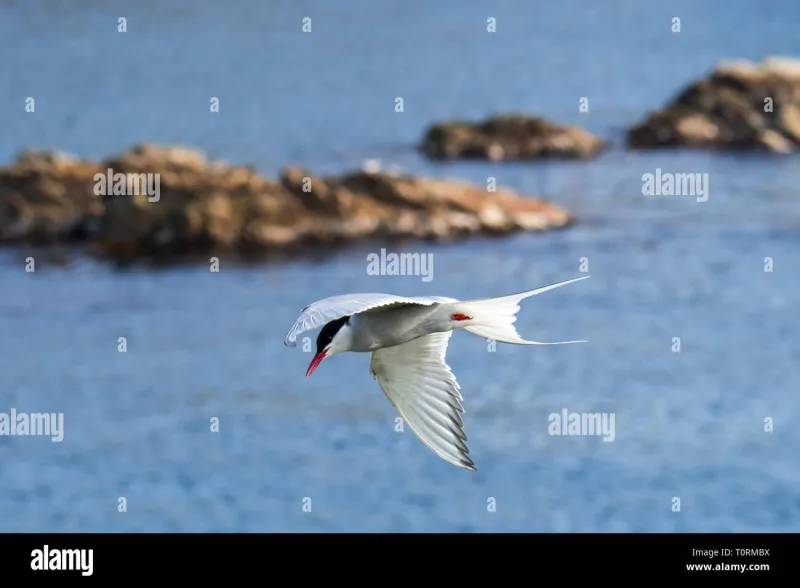
Photo: arctic tern flying over ocean migration aerial wildlife photography, via c8.alamy.com
There's a moment in almost every great migration documentary where the camera pulls back wide — really wide — and you realize the bird you've been watching for the past twenty minutes has just crossed three international borders without a passport, a visa, or a second thought. It's a small moment. But lately, filmmakers have started treating it like the whole point.
Something has shifted in the world of avian nature filmmaking, and if you've been paying attention to what's landing on your favorite streaming platforms over the past couple of years, you've probably felt it. Bird migration documentaries used to be about spectacle — breathtaking aerial photography, David Attenborough's voice dropping to a near-whisper, maybe a close call with a predator to keep things tense. Now they're doing something more complicated and, honestly, more interesting. They're holding up a mirror.
From Feathers to Foreign Policy
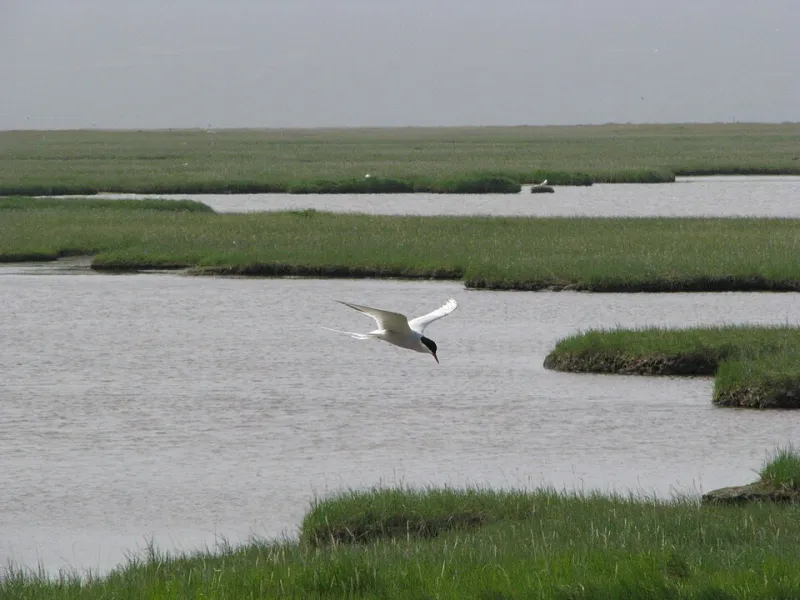
The Arctic tern is kind of the unofficial mascot of this whole phenomenon. It travels farther than any other creature on Earth — pole to pole and back again, every single year, logging roughly 44,000 miles in a single migration cycle. That journey takes the bird through the territorial waters and airspaces of dozens of nations, many of which have radically different ideas about environmental protection, fishing rights, and coastal development.
When documentary crews follow that route — and several recent productions have done exactly that — they don't just capture stunning footage of a small gray-and-white bird riding thermals over the open Atlantic. They stumble into a geopolitical map drawn in real time. A feeding ground that used to sustain a colony has been disrupted by industrial trawling. A stopover wetland in West Africa is shrinking because upstream damming in another country redirected the water supply. A nesting site in the Arctic is warming at twice the global average rate.
None of these stories are about geopolitics in the traditional sense. There are no diplomats on screen, no UN floor speeches. But the camera doesn't lie, and audiences — especially American audiences who've grown up watching prestige documentary work on streaming platforms — have gotten very good at reading what's left unsaid.
The Streaming Platform Play
Here's where it gets interesting from a content strategy perspective. Major streaming services have figured out that this particular lane of documentary filmmaking punches way above its weight in terms of cultural conversation. A well-made bird migration doc generates the kind of cross-demographic appeal that's genuinely hard to manufacture: nature lovers, climate activists, foreign policy wonks, and people who just want something beautiful to watch on a Sunday afternoon all find something to connect with.
That's a rare combination. And platforms are investing accordingly.
The production values on recent migration-focused docs have climbed sharply. We're talking drone technology that can shadow a single bird for extended stretches without disturbing it, thermal imaging that reveals nighttime movements previously invisible to filmmakers, and satellite tracking data visualized in ways that make abstract migration corridors feel viscerally real. The storytelling infrastructure has caught up with the ambition.
What's also changed is the willingness to let human voices into the frame. Earlier generations of nature filmmaking kept a careful distance from political commentary — partly out of genuine philosophical commitment to letting nature speak for itself, and partly because controversy was bad for business. That calculus has flipped. Controversy, handled thoughtfully, drives conversation. Conversation drives engagement. And engagement is the whole game in streaming.
The Conservation Conflict Layer
Some of the most compelling recent work in this space has focused specifically on the collision between migration corridors and national sovereignty claims. When a protected species crosses from a country with strong environmental legislation into one with weaker protections — or no protections at all — what happens? Who's responsible? Who even has the authority to answer that question?
These aren't rhetorical questions. They're playing out in real time across multiple continents, and documentary filmmakers have found that birds make uniquely powerful vehicles for exploring them. There's something about the instinctive, ancient nature of migration — the fact that these routes were established long before any human drew a line on a map — that makes the political complications feel especially absurd and especially urgent at the same time.
For American viewers, there's an added layer of resonance. The US sits at the intersection of two major migratory flyways — the Atlantic and the Mississippi — and hosts critical stopover habitat for hundreds of species. Domestic policy decisions about wetlands protection, coastal development, and agricultural land use ripple outward in ways that affect bird populations (and the ecosystems that depend on them) across the entire Western Hemisphere. A documentary that starts in the Canadian Arctic and ends in Patagonia is, whether it intends to be or not, partly a story about American choices.
Why This Moment Feels Different
The honest answer is that it's a combination of timing and technology. Climate change has made the stakes of these stories undeniable in ways that were easier to dismiss a decade ago. The visual tools available to filmmakers have made the invisible visible — you can now watch a bird's migration route traced in real time against a backdrop of satellite data showing sea surface temperatures, land use changes, and storm pattern shifts. The connection between the animal and the environment isn't something you have to explain anymore. You can just show it.
There's also a growing appetite among documentary audiences for content that earns its emotional weight. The nature documentary genre spent years trading in a specific kind of wonder — beautiful, a little melancholy, ultimately reassuring. That formula still works, but it competes now with a viewer base that's been through a lot and wants their media to meet them where they are. A film that follows a bird across a dying reef, a militarized border zone, and a coastline reshaped by a category-five hurricane is not reassuring. But it is honest. And right now, honesty is its own kind of spectacle.
The Bigger Picture
What migration documentaries are really doing — at their best, in their most ambitious form — is reminding us that the natural world doesn't organize itself around the stories we tell about it. Birds don't know about trade disputes or territorial waters or climate accords. They just fly. And in flying, they trace connections between places and peoples and problems that we spend enormous energy pretending are separate.
Streaming platforms have found a format that can hold all of that complexity without losing the essential magic of watching something wild and free move through the world. That's not a small thing. In a media environment full of content engineered to confirm what you already believe, a documentary that follows a bird into genuinely uncertain territory — geographic, political, ecological — is doing something genuinely rare.
Turn it on. See where it takes you.