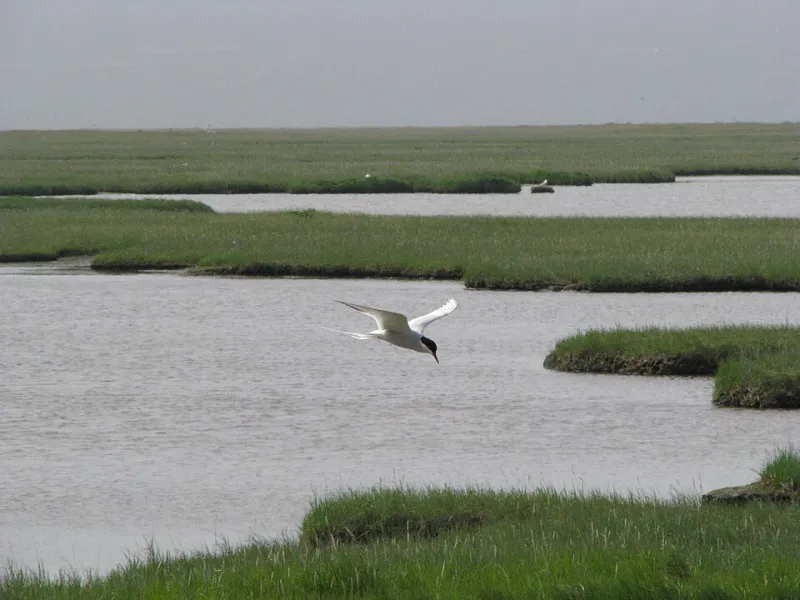
A Bird That Lives Everywhere and Belongs Nowhere: The Tern as Our Streaming Spirit Animal
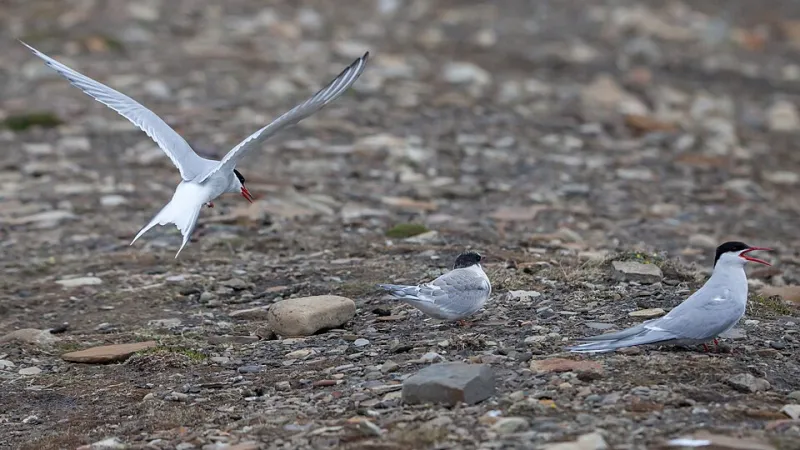
Photo: Andreas Weith, CC BY-SA 4.0, via Wikimedia Commons
Let me get the confession out of the way first: I've probably watched more sunsets on a screen this year than in the sky. I say that without shame, because I don't think I'm alone. And I've come to believe that if the streaming age had an official bird — a mascot stamped on the masthead of every platform — it shouldn't be the eagle or the owl or anything dignified like that. It should be the Arctic Tern.
The Bird of Perpetual Transit
Consider the tern's resume. It breeds in the Arctic, winters in the Antarctic, and spends the rest of its life airborne over oceans it never settles on. It lives everywhere and belongs nowhere. It chases perpetual daylight, literally following summer around the planet, and it never stops moving long enough to call any of it home.
Now consider how we watch. We don't own movies anymore; we rent access. We don't have channels; we have feeds that never terminate. We scroll through footage of Patagonia, the Serengeti, the Greenland ice sheet — passing through, touching nothing, committed to no place. The tern's endless commute and our endless scrolling are, structurally, the same behavior. Motion mistaken for arrival.
From Ornithology Footnote to Streaming Icon
It wasn't always this way. For most of the twentieth century, the tern was a specialist's bird — a line in a field guide, a data point in banding studies. What changed? Two things, really. First, miniaturized tracking tech turned its migration from a hypothesis into a mappable, filmable, dramatic narrative. Second, streaming platforms discovered that audiences were hungry for journeys rather than specimens — stories with an arc you could feel.
The tern fit the new format perfectly. Its life is a three-act structure that renews annually. It has the drama of a road-trip movie with the production values of a $10 million nature doc. Small wonder it started headlining titles and anchoring entire streaming slates.
The Uncomfortable Part
But here's where my affection for the bird gets complicated. We celebrate the tern for its wandering, and we've adopted its wandering as a lifestyle — but the tern doesn't have a choice, and it also doesn't have a phone. When it lands, it lands. It fishes actual waters and defends an actual nest. We, on the other hand, increasingly experience the world entirely in transit mode: sampling, browsing, skimming past the very places we live.
The tern, in other words, is a mirror, and mirrors aren't always flattering. It shows us a version of ourselves that's always in motion, always watching, never quite rooted. The bird crosses the planet and comes back to the same rock. We cross the internet and come back to the same feed.
What I'd Take From the Tern
I'm not here to scold anyone into deleting their subscriptions. I write for a streaming site; that would be rich. But I think the tern offers one quiet lesson worth stealing: it travels enormously, but it returns. It has a place it goes back to, a colony it knows, a stretch of coastline that is, for the bird, home base.
Maybe the streaming version of that is choosing what we watch with a little more intention — returning to a subject, a region, a story until we actually know it, instead of grazing across everything and remembering none of it. The tern flies 44,000 miles a year and never once gets lost. We have a device in our pockets that can't say the same about us.
The bird lives everywhere and belongs nowhere. We don't have to copy that part.