When Every Nature Doc Becomes a Thriller: How Streaming Traded Wonder for Adrenaline
Photo: Philipp Egger, CC BY-SA 4.0, via Wikimedia Commons
There's a moment most of us probably remember — maybe from a childhood Saturday morning in front of the TV, or from a late-night rabbit hole that somehow ended with a nature special — where you just watched an animal do something completely ordinary and felt, against all logic, genuinely moved. A heron standing still in shallow water. A fox kit sleeping in afternoon light. Nothing exploding. Nobody getting eaten. Just a creature existing, and you existing alongside it for a few quiet minutes.
That feeling is getting harder to find on streaming platforms in 2024.
Somewhere between the algorithm's appetite for engagement and the pressure to justify nine-figure production budgets, wildlife documentaries made a deal with the action-movie genre — and nature lost the negotiation.
The Highlight Reel Problem
Here's what modern nature documentary production increasingly looks like: a team spends months in the field capturing thousands of hours of footage. Then an editor, working against platform pressure for "compelling content," assembles those hours into a sequence of escalating stakes. Predator chases. Dramatic weather events. Survival moments that arrive like jump scares. The quiet footage — the animal simply living — hits the cutting room floor.
The result is a kind of wildlife content that functions less like a documentary and more like a highlight reel. And like any highlight reel, it's exciting for about ten minutes before it starts feeling hollow.
This isn't entirely new. Sensationalism has always had a foothold in nature programming. But streaming has accelerated the dynamic in ways that are genuinely hard to overstate. When platforms are competing for watch time in a catalog of tens of thousands of titles, the incentive to make every episode feel like a season finale becomes almost irresistible. The data rewards intensity. Intensity gets greenlit. Quiet gets cut.
Emotional Exhaustion Is Not the Same as Engagement
Producers often defend the action-heavy approach by pointing to viewer engagement metrics. People watch these sequences. They share them. The clips go viral. And sure — a cheetah bringing down a gazelle will rack up millions of views on social media. But there's a meaningful difference between content that generates a stress response and content that builds genuine emotional investment.
When you're watching a wildlife documentary that delivers a high-stakes sequence every four minutes, your nervous system is essentially being treated the same way it is during a Marvel movie. You're in a state of constant anticipatory tension. That's not connection — that's stimulation. And like any stimulation-based experience, it requires escalation to maintain its effect. Each season needs bigger predators, more catastrophic weather, more desperate survival moments. The ceiling keeps rising.
Meanwhile, the thing that actually makes people care about animals — the slow accumulation of familiarity, the sense that you know this creature, that you've spent real time in its world — gets systematically squeezed out.
Think about the difference between watching a stranger get into a car accident versus watching someone you know stub their toe. The stranger's accident is objectively more dramatic. But the second scenario probably hits harder, because you have context, history, emotional investment. Great wildlife filmmaking used to understand this. It built that investment deliberately, patiently, before it asked you to feel anything big.
What Parasocial Connection With Animals Actually Requires
The term "parasocial relationship" usually comes up in conversations about influencers or podcast hosts — the one-sided sense of knowing someone through media. But it applies just as meaningfully to wildlife content. The best nature documentaries have always worked by cultivating a parasocial bond between the audience and specific animals. You follow a particular wolf pack across a season. You learn individual birds by their behaviors. You start to feel, irrationally but powerfully, that you know them.
That process takes time and ordinariness. It requires footage of animals doing mundane things — foraging, resting, navigating their social hierarchies in ways that don't involve anyone dying. The dramatic moments only land emotionally when they're embedded in that larger context of familiarity. Strip out the ordinary, and the dramatic becomes just noise.
Streaming platforms, for all their investment in nature content, seem to have largely forgotten this. The shows that consistently generate real audience loyalty — the ones people remember years later and describe to friends with genuine feeling — are almost never the ones that delivered the most spectacular sequences. They're the ones that made you feel like you'd actually spent time somewhere real, with creatures that felt real.
A Few Holdouts (and What They Prove)
It's not a completely bleak picture. There are filmmakers and series that still prioritize intimacy over intensity, and they tend to develop quietly devoted audiences rather than viral moments. Certain PBS productions, independent documentary filmmakers working outside the major platform ecosystem, and some international co-productions still build their work around observation rather than orchestration.
What's interesting is that these quieter productions often generate a different kind of conversation. People don't just share clips — they talk about how a series made them feel, what it made them think about, whether it changed how they see a particular animal or ecosystem. That's a different quality of engagement, and arguably a more valuable one, even if it's harder to quantify in a dashboard.
The audience for this kind of content exists and is probably larger than streaming platforms currently assume. The success of slower, more contemplative nature content on platforms like YouTube — channels built around extended, unnarrated observation footage — suggests that plenty of viewers are actively seeking the kind of experience that mainstream streaming has largely abandoned.
Rethinking What "Compelling" Means
The fix isn't complicated, even if it runs against current incentive structures. It starts with redefining what counts as engaging content. A five-minute sequence of a river otter playing alone in a creek isn't failing to be dramatic — it's succeeding at something else entirely. It's building the kind of quiet, durable connection that makes audiences come back not for the next shocking moment, but because they genuinely want to spend more time in that world.
Producers willing to make that case to their platform partners — to argue that intimacy is a feature, not a bug — might find more receptive ears than they expect. Viewer fatigue with peak-TV intensity is real and documented. People are increasingly seeking out content that doesn't leave them feeling worked over.
Wildlife has always been one of the most powerful things a camera can point at. Not because nature is relentlessly dramatic, but because it's genuinely other — a world operating by its own logic, indifferent to our schedules and our storylines. The best wildlife filmmaking honors that otherness by letting it breathe.
Streaming could still be the place where that happens. But it's going to require caring a little less about what goes viral, and a little more about what actually stays with people.
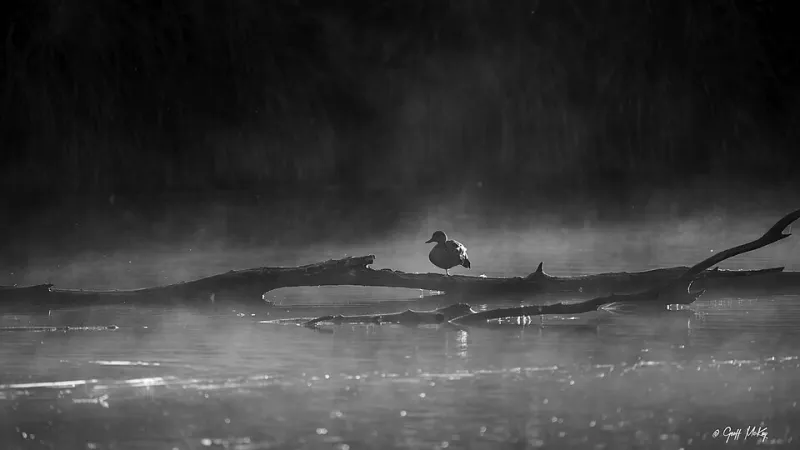
And sometimes, what stays with people is just a bird, standing still, in the last light of the afternoon.